
Goodman HVAC Review 2026: Models, Warranty & Verdict
Founded 1975 by Harold Goodman. Acquired by Daikin in 2012 for $3.7B. Manufactures at 4.1M sq ft Daikin Texas Technology Park. R-32 refrigerant ecosystem with lifetime heat exchanger on registered higher-efficiency furnaces.
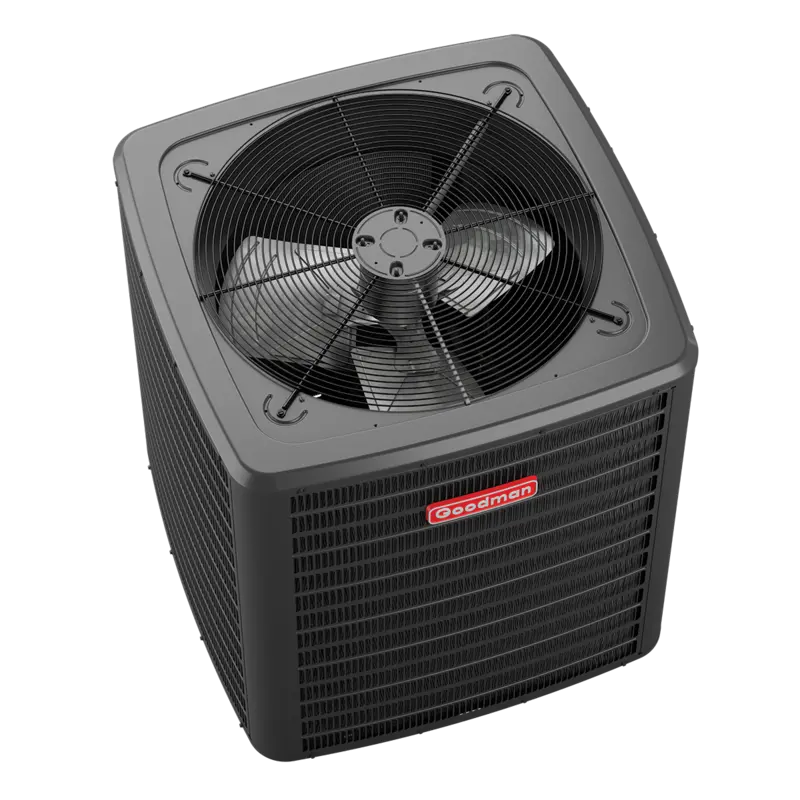
Brand facts
- Founded
- 1975
- Headquarters
- Waller, Texas, USA
- Parent company
- Daikin Comfort Technologies North America (Daikin Industries Ltd., TYO: 6367)
- Website
- Official site
Goodman delivers credible mid-tier HVAC equipment at 20–30% below Carrier installed pricing, runs Daikin-engineered R-32 refrigerant (cheaper to service than R-454B competitors), and offers a 10-year unit replacement warranty on select registered models. The catch: warranty caveats matter, reliability sits below Carrier and Trane, and “select models” is rarely defined publicly.
Who should buy Goodman in 2026
Goodman fits three buyer profiles especially well. Budget-conscious replacement buyers in mixed and hot climates often save $2,000–$5,000 versus Carrier on a complete installation. Investment property owners typically prefer Goodman because reliability data is acceptable and replacement cost is low. Buyers in California, Florida, Georgia, and Quebec gain automatic registered-tier warranty coverage without filing paperwork, thanks to state consumer-protection rules. The brand is less appropriate for premium-feature seekers chasing variable-speed comfort across multiple zones — Lennox Signature or Carrier Infinity serve that segment better.
Three specific scenarios where Goodman shines: rental property HVAC replacement, primary residence replacement in hot climates with 5–10 year ownership horizons, and homeowners willing to register within the 60-day window. Skip Goodman if absolute reliability matters more than upfront cost.
Strengths & weaknesses at a glance
Goodman delivers credible HVAC equipment at a price that runs 20–30% below Carrier installed, on R-32 refrigerant that is currently cheaper to service than competitor R-454B systems, with warranty marketing that exceeds anything Carrier offers on paper. The “select models” caveat and broader dealer network variance temper the upside. Reliability sits below Carrier and Trane historically. The 2024 CPSC packaged-unit recall affected Goodman among other DCT brands.
The math favors Goodman for budget-conscious replacement buyers in hot or mild climates with 5–10 year ownership horizons, investment property owners, and buyers in California, Florida, Georgia, and Quebec who gain automatic registered-tier coverage. The math favors Carrier or Trane for premium-feature seekers, long-stay owners in coastal climates, and buyers prioritizing peak reliability over upfront cost.
The R-32 refrigerant story matters more in 2026 than the brand positioning suggested in 2024. Goodman has gained a quiet service-cost advantage that the marketing materials have not fully caught up to yet. Smart buyers are noticing.
Goodman product lineup: AC, heat pumps, and furnaces
Goodman’s residential lineup covers three primary categories. The current 2026 catalog leads with the GSXV9 variable-speed central air conditioner at 22.5 SEER2 on R-32 refrigerant. Furnaces split into two efficiency tiers: 90%+ AFUE condensing models (which qualify for lifetime heat exchanger warranty when registered) and 80% AFUE standard-efficiency models. Heat pumps mirror the AC tier structure with matching variable-speed and single-stage options.
90%+ AFUE gas furnaces
Goodman’s high-efficiency furnaces operate at 90% AFUE or higher, qualifying registered units for lifetime heat exchanger limited warranty coverage. These models suit cold-climate homes where heating dominates annual energy costs. Typical AFUE ratings range from 92% to 98%, depending on the specific model and motor type. Two-stage and modulating versions improve comfort and lower utility bills versus single-stage equipment.
80% AFUE gas furnaces
The 80% AFUE tier targets budget-conscious buyers in mild climates where furnace efficiency matters less. These furnaces are cheaper to purchase but lose the lifetime heat exchanger warranty benefit. Heat exchanger coverage on 80% AFUE models typically caps at 20 years for the original owner. Buyers in southern states often select this tier because heating demand is low and payback math favors equipment cost over efficiency.
Central air conditioners
The Goodman central AC lineup runs from entry-level single-stage to the flagship GSXV9 variable-speed system. The GSXV9 reaches up to 22.5 SEER2, exceeding Carrier’s Infinity 21 (26VNA1) flagship at 21.0 SEER2. All current Goodman central AC models use R-32 refrigerant, putting them in the Daikin-led refrigerant camp rather than the Carrier-Lennox-Trane R-454B camp. This matters at service time (more on that below).
Heat pumps
Heat pump tiers parallel the AC lineup. Variable-speed models pair with the GSXV9 platform for cold-climate buyers. Single-stage models serve mild-climate replacements where heating demand is moderate. Specific HSPF2 ratings vary by model; verify with the AHRI Reference Number for the exact outdoor-plus-indoor combination your installer proposes.
Video: DIY Air Conditioner Replacement Part 1 -Step By Step Guide- · The DIY HVAC Guy
## Pricing by tonnage: Goodman vs CarrierGoodman pricing typically runs 20–30% below Carrier installed across tonnages. PICKHVAC pricing data for Carrier indicates a 3-ton installation costs $4,500–$7,300. Goodman equivalents typically install for $3,200–$5,500 in the same market conditions. Amana — Goodman’s sister brand under DCT NA — sits slightly above Goodman at $5,540–$10,980 according to Today’s Homeowner pricing data, reflecting Amana’s premium positioning.
Goodman does not publish official MSRP either. Distributors and contractors set local pricing. Three factors drive the spread within Goodman’s typical range: regional labor rates (rates in California and Northeast metros run 30–40% above the national average), ductwork modification requirements (existing duct systems often need resizing for higher-SEER2 equipment), and equipment tier selection (variable-speed adds $1,500–$3,000 versus single-stage at the same tonnage).
The pricing math typically favors Goodman over Carrier when ownership horizons are short. Goodman saves $1,500–$3,000 upfront on a typical 3-ton install, which is often more than the operating cost differential over 5–7 years of ownership. Long-stay owners (10+ years) sometimes find Carrier’s efficiency and warranty package recovers the premium.
Request quotes from at least three authorized Goodman dealers in your ZIP code. Itemize each quote: equipment, labor, refrigerant, electrical, permit, and disposal broken out separately. Bundled all-in quotes hide significant variance.
Efficiency & performance
SEER2 measures cooling efficiency under the 2023 federal test methodology, replacing the older SEER metric. SEER2 ratings typically run about 5% lower than the old SEER scale for identical hardware. Goodman’s GSXV9 hits 22.5 SEER2, which translates to roughly 23.6 SEER under the legacy scale. AFUE measures gas furnace efficiency as a percentage of fuel converted to delivered heat — a 95% AFUE furnace delivers 95 cents of heat per dollar of gas burned.
| Goodman tier | Equipment | Efficiency rating | Refrigerant | Typical pricing range |
|---|---|---|---|---|
| Premium variable-speed AC | GSXV9 | 22.5 SEER2 | R-32 | 20–30% below Carrier |
| Premium condensing furnace | 90%+ AFUE tier | 92–98% AFUE | n/a | Mid-tier |
| Standard AC | Single-stage | 14–16 SEER2 | R-32 | Lowest tier |
| Standard furnace | 80% AFUE tier | 80% AFUE | n/a | Lowest tier |
Buyers comparing equipment should always pull the AHRI Reference Number. AHRI publishes certified matched-system ratings — outdoor unit plus indoor coil combinations — which often differ from peak ratings printed on marketing materials. The AHRI number appears on tax credit and ENERGY STAR documentation that your dealer should provide before installation.
Federal AIM Act rules required HVAC manufacturers to stop producing new R-410A units after January 1, 2025. Each brand picked a replacement refrigerant. Goodman chose R-32 refrigerant — Daikin’s proprietary single-component refrigerant. Carrier, Bryant, Lennox, Trane, Rheem, and York chose R-454B (a blended refrigerant). The two refrigerants are not interchangeable. Service parts and supply chains do not cross over.
The 2026 cost reality on R-454B has been harsh. Aftermarket R-454B cylinders ran $700–$2,000 per 20-pound cylinder in early 2026, up from $345 in 2021. Honeywell added a 42% surcharge on R-454B earlier this year. A typical residential leak repair takes 2–6 pounds of refrigerant. The same repair on R-32 costs significantly less because R-32 is a single-component refrigerant (R-454B is a blend), simpler to handle, and not subject to the same supply-chain shock.
Technicians on Reddit /r/HVAC and HVAC-Talk forums have shifted preference toward R-32 systems specifically on service economics as of May 2026. The trend reframes Goodman’s market position. Historically Goodman ranked as a value-tier brand on price alone. The current refrigerant reality adds a serviceability advantage that competitors in the R-454B camp do not match. Daikin’s R-32 strategy is vindicated on service economics in 2026.
One industry-wide quirk affects both refrigerants. First-generation MOS leak sensors used on A2L refrigerants (R-454B and R-32 are both A2L, mildly flammable) cross-react with VOCs from spray foam insulation, paint, vinyl flooring, and even hairspray. The result is nuisance lockouts that look like refrigerant leaks but aren’t. This is not a Goodman-specific issue — it affects all A2L-refrigerant equipment industry-wide — but new Goodman buyers should know it exists.
Goodman warranty: the 10-year unit replacement program
Goodman’s headline warranty offering is the 10-year unit replacement limited warranty on select models when registered online within 60 days of installation. This is materially more aggressive than Carrier’s Consumer Choice program. Select higher-efficiency Goodman air conditioners also include a lifetime compressor limited warranty for the original registered owner. Registered gas furnaces with condensing efficiency receive a lifetime heat exchanger limited warranty.
Three caveats matter. First, “select models” is not defined publicly on goodmanmfg.com. Buyers must ask the dealer specifically whether their proposed model qualifies for unit replacement and lifetime compressor coverage. Second, the 60-day registration window is tighter than Carrier’s 90 days. Miss the deadline and warranty drops to 5-year parts only with no extended coverage. Third, lifetime compressor coverage is not transferable to subsequent homeowners — it ends at the original buyer’s sale of the property.
Goodman publishes a state-exception clause verbatim:
“Residents of California, Florida, Georgia and Quebec do not need to register the product in order to get all the rights and remedies of registered owners under the limited warranty.”
This is meaningful for buyers in those jurisdictions. Automatic registered-tier coverage applies without filing paperwork. Florida, Georgia, and Texas also mandate warranty transferability to new property owners under certain installation dates. Verify the specific transfer rules with the Goodman dealer at quote time, because the rules differ by state and install year.
Register at goodmanmfg.com within 60 days. Keep the registration confirmation email. Most warranty denials trace back to missing or late registration, often because the installing contractor failed to file it on the homeowner’s behalf.
Reliability & known issues
Goodman’s reliability tier sits below Carrier and Trane historically. Consumer Reports typically rates Goodman below the top-tier brands on predicted reliability, though owner satisfaction data is acceptable. Two specific incidents shape the recall record.
The 2024 CPSC recall affected approximately 12,100 packaged units sold January through March 2024 across Daikin Comfort Technologies North America brands: Daikin, Goodman, Amana, and Bryant (the latter via cross-manufacturing arrangements). The hazard was fire risk. Remedy details are documented at the CPSC website. Buyers of packaged units from that period should verify their serial number against the recall database.
Specific common complaints documented in HVAC technician forums and homeowner reviews:
- Aluminized vs stainless heat exchanger durability — Goodman’s aluminized variant shows lower corrosion resistance versus Amana’s stainless in humid climates and gas combustion environments.
- Dealer install quality variance — broader dealer network means installation quality varies more than within Carrier’s Factory Authorized Dealer program.
- “Select models” warranty ambiguity — buyers often discover after purchase that their specific SKU doesn’t qualify for the headline 10-year unit replacement.
- Capacitor and contactor early failures — common across budget HVAC tiers but documented frequently in Goodman threads.
These are documented patterns, not statistical evidence of systemic failure rates. Most Goodman installations operate reliably for 12–18 years with annual maintenance. Reliability depends heavily on installation quality, climate, and maintenance discipline.
How it compares to top alternatives
Goodman occupies a different competitive position than the top-tier premium brands. The table below summarizes the verified competitive context across the four major US residential HVAC manufacturers.
| Brand | Flagship SEER2 | Refrigerant | Warranty registration | Typical 3-ton install | Reliability tier |
|---|---|---|---|---|---|
| Goodman | 22.5 (GSXV9) | R-32 | 60 days | $3,200–$5,500 | Below top tier |
| Carrier | 21.0 (26VNA1) | R-454B | 90 days | $4,500–$7,300 | 4/5 Consumer Reports predicted |
| Lennox | 26.0 (SL25KCV R-454B) | R-454B (flagship SL28XCV still R-410A) | 60 days | Premium tier | Mixed reliability data |
| Trane | Not published cleanly | Mixed (XV20i still R-410A May 2026) | 60 days | $4,580–$7,160 | 5/5 Consumer Reports predicted |
The Goodman GSXV9 at 22.5 SEER2 exceeds Carrier’s flagship Infinity 21 at 21.0 SEER2 on raw efficiency. Lennox SL25KCV leads peak SEER2 at 26.0 in the R-454B refrigerant camp. Trane has slightly better reliability data and the patented Spine Fin coil for coastal corrosion resistance. Trane also publishes a 2026 price guide with tier-level transparency — Carrier and Goodman do not.
Goodman’s price advantage typically runs 20–30% below Carrier and Trane installed. The Daikin parent-company engineering brings R-32 refrigerant currency that competitors lack. Carrier offers the Consumer Choice 10-year parts OR 5-year parts plus 3-year labor option that Goodman doesn’t match. The choice comes down to ownership horizon, budget priority, and willingness to register warranty paperwork on time.
For coastal installations, Trane’s all-aluminum Spine Fin coil rated for 2,000-hour salt spray (twice the industry standard 1,000 hours) outperforms Goodman’s standard coil in salt-air environments. Florida and Gulf Coast buyers should weigh this against Goodman’s price advantage.
Both Goodman and Amana operate under Daikin Comfort Technologies North America. Both brands manufacture in the same 4.1-million-square-foot Daikin Texas Technology Park facility in Waller, Texas. Component-level engineering overlaps significantly. The differences matter at three points.
| Attribute | Goodman | Amana |
|---|---|---|
| Position | Value tier | Premium-positioned sister brand |
| Heat exchanger material | Aluminized steel | Stainless steel |
| Warranty marketing | 10-year unit replacement (select) | Lifetime Unit Replacement branding (more aggressive marketing) |
| Cabinet quality | Standard | Premium |
| Coil material | Mixed | 100% aluminum |
| Pricing differential | Baseline | ~10–20% above Goodman |
| Manufacturing facility | Waller, TX | Waller, TX (same) |
The Amana stainless steel heat exchanger offers longer corrosion resistance than Goodman’s aluminized variant, particularly relevant for high-humidity climates and gas combustion environments. The “Lifetime Unit Replacement” marketing on Amana is essentially the same mechanism as Goodman’s 10-year unit replacement, but Amana extends the marketing claim to “lifetime” while Goodman caps at 10 years. Read the actual warranty terms — both have the same “select models,” “original registered owner,” and “not transferable” caveats.
Amana HVAC equipment is unrelated to Amana appliances. Whirlpool acquired Amana appliances (refrigerators, washers, dryers) in 2006. Amana HVAC has been under Goodman since 1997 and under Daikin since 2012. Different companies, shared brand name. Confusion between the two often arises during warranty research.
Rebates, incentives & total cost
Can I still claim the federal 25C tax credit for a 2026 Goodman installation?
No. The federal Section 25C Energy Efficient Home Improvement Credit terminated December 31, 2025, under the One Big Beautiful Bill Act. Installations completed by December 31, 2025, can still be claimed on the 2025 tax return filed during the 2026 tax season. For 2026 installs, look to state HEAR (HEEHRA) rebates where your state has launched the program. Currently 15 states accept applications. The federal rebate path requires meeting Area Median Income tier qualifications.
How to buy: dealer network, install, and what to ask
Goodman sells through a broad dealer network without the Factory Authorized Dealer tier that Carrier operates. This means consistent training and customer-satisfaction screening varies more by dealer than within the Carrier FAD program. Quality of installation often dictates equipment longevity more than equipment brand selection. Choose the dealer carefully.
The Goodman dealer locator on goodmanmfg.com filters by ZIP code. Independent verification helps: check Better Business Bureau ratings, Google reviews of at least 50 entries spanning multiple years, and state contractor licensing status. Most states require HVAC contractor licensing at the state or local level. EPA Section 608 certification is federally required for technicians handling refrigerants — every legitimate dealer’s installation technicians should carry this.
The 60-day warranty registration window starts the day the unit is energized, not the contract date. Calendar the deadline immediately after installation.
Buying Goodman is not a single decision. It is five sequential choices that compound into the final value math.
1. Get a Manual J load calculation
Most homes are oversized. The existing equipment tonnage was probably wrong when it was installed years ago. A correctly sized 3-ton unit dehumidifies better than an oversized 4-ton, runs longer cycles, and lowers energy costs. ACCA Manual J is the residential load calculation standard. Energy Star certified installs require it. If a Goodman dealer skips Manual J, do not sign the contract.
2. Select the tier honestly
The 80% AFUE furnace tier works for mild-climate buyers with low heating demand. The 90%+ AFUE tier earns the upgrade in cold climates where heating dominates energy bills. The GSXV9 variable-speed AC at 22.5 SEER2 recovers the premium over single-stage in hot climates with 10+ year ownership horizons. Single-stage AC fits short ownership timelines and mild climates.
3. Request three authorized Goodman dealer quotes
Use the goodmanmfg.com dealer locator to filter authorized dealers in your ZIP code. Get itemized quotes from at least three dealers: equipment, labor, refrigerant, electrical, permit, disposal of old unit broken out separately. Bundled all-in quotes hide pricing variance. Cross-check each dealer’s BBB rating, Google reviews depth, and state HVAC license status. EPA Section 608 certification is mandatory for refrigerant handling.
4. Verify your specific model qualifies for headline warranty terms
Ask each dealer in writing whether the proposed Goodman SKU qualifies for the 10-year unit replacement limited warranty and lifetime compressor limited warranty advertised on goodmanmfg.com. The “select models” caveat is real. Some SKUs qualify. Some don’t. Get the answer in writing before signing the contract. Lifetime heat exchanger coverage on 90%+ AFUE furnaces is more universal but verify model-specifically.
5. Register at goodmanmfg.com within 60 days
The 60-day registration window starts the day the unit is energized, not the contract date. Register the equipment yourself rather than trusting the dealer to file it. Most warranty denials trace back to missed registration. Keep the confirmation email permanently. Residents of California, Florida, Georgia, and Quebec receive automatic registered-tier coverage without filing, but registering anyway provides documentation in case of dispute.
Company background & ownership
Goodman Manufacturing was founded in 1975 by Harold Goodman in Houston, Texas, growing into the largest residential HVAC manufacturer in the United States by unit volume. Daikin Industries (Japan) acquired Goodman Global for $3.7 billion in August 2012, with the transaction closing November 1, 2012.
The acquisition reshaped Goodman’s product engineering around Daikin’s R-32 refrigerant strategy — a single-component refrigerant that now positions the brand against Carrier, Lennox, and Trane’s R-454B camp. Manufacturing consolidated at the Daikin Texas Technology Park in Waller, Texas, a 4.1-million-square-foot facility opened in October 2016 at a cost of $417 million. The U.S. subsidiary was renamed Daikin Comfort Technologies North America effective April 1, 2022. Goodman, Amana, and Daikin US brands all manufacture at this facility.
Daikin Industries generates approximately $31 billion in annual revenue, making it the world’s largest HVAC manufacturer by sales. Goodman remains the value-tier brand within the DCT NA portfolio; Amana is the premium-positioned sister brand.