Daikin HVAC Review 2026: 12-Year Warranty & R-32 Strategy
Founded 1924 in Osaka, Japan. World's largest HVAC manufacturer by revenue. Acquired Goodman 2012. R-32 refrigerant pioneer. 12-year parts + 12-year unit replacement warranty industry-leading.
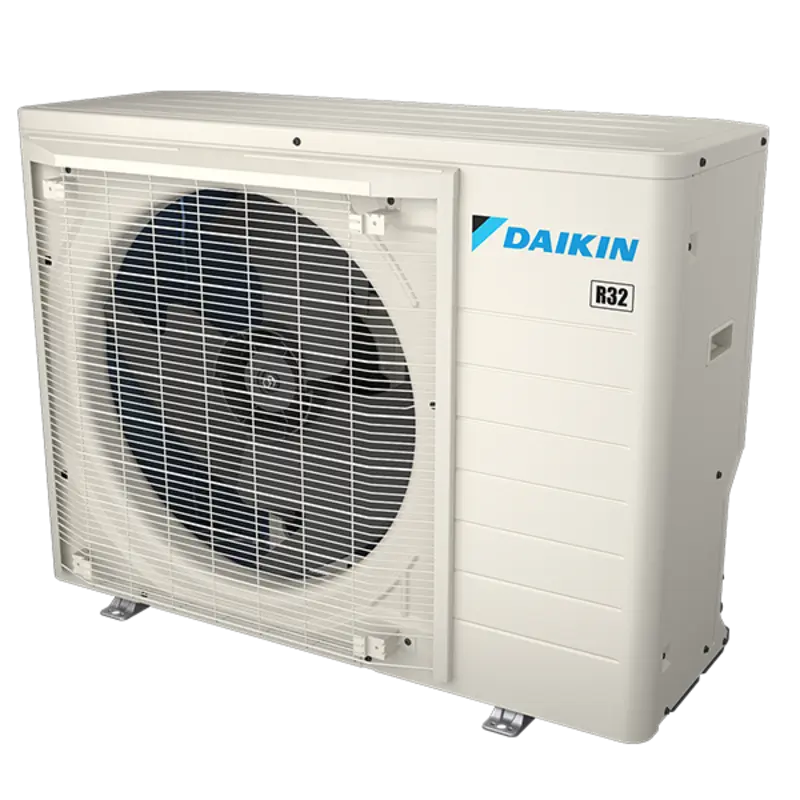
Brand facts
- Founded
- 1924
- Headquarters
- Osaka, Japan (US HQ: Waller, Texas)
- Parent company
- Daikin Industries Ltd. (TYO: 6367)
- Website
- Official site
Daikin Industries — the world’s largest HVAC manufacturer by revenue — delivers the longest standard warranty term among major US residential brands: 12-year parts plus 12-year unit replacement on registered equipment. R-32 refrigerant choice currently delivers cheaper service costs than R-454B competitors. Labor coverage requires a separately paid Asure plan. The brand offers central AC, heat pumps, gas furnaces, and ductless mini-splits.
Who Should Buy Daikin
Three buyer profiles benefit most from Daikin equipment in 2026. Long-stay homeowners who plan to keep equipment 12+ years value the 12-year parts plus 12-year unit replacement warranty — the longest standard term in residential HVAC. Buyers in California, Florida, and Quebec receive automatic registered-tier coverage without filing paperwork through the Daikin Comfort Technologies North America jurisdictional policy. Mini-split shoppers who prioritize Daikin’s R-32 refrigerant currency over Mitsubishi’s deeper cold-climate range often pick Daikin Aurora for hot and humid climates.
Three scenarios where Daikin fits less well. Buyers in cold climates needing operation below -4°F find Mitsubishi Hyper-Heat (-13°F US residential) outperforms Daikin Aurora at extreme low temperatures. Shoppers seeking absolute lowest cost find sister-brand Goodman delivers similar Waller, Texas factory hardware at 20–30% lower installed pricing. Buyers wanting included labor coverage face Daikin’s structure: standard warranty includes zero labor, and the Asure Extended Service Plan adds material cost.
Specific Buyer Match Scenarios
A homeowner replacing a 15-year-old central AC in Atlanta values the Daikin 12/12 warranty because long-term coverage matches the planned ownership horizon. The same homeowner in Minneapolis might select Mitsubishi for deeper cold-climate heating range. A buyer in Florida appreciates the automatic registered coverage that eliminates paperwork friction.
Strengths and Weaknesses at a Glance
Daikin earns the premium for long-stay homeowners who value the industry-leading 12-year parts plus 12-year unit replacement warranty and R-32 refrigerant currency. The world’s largest HVAC manufacturer by revenue brings global engineering scale to the US residential market. Sister brands Goodman and Amana share the Waller Texas factory hardware at lower price points for budget-conscious buyers.
The case against Daikin has three dimensions. Standard warranty includes zero labor coverage — buyers needing labor protection face Asure Extended Service Plan costs that add material expense over equipment life. Mini-split competitor Mitsubishi outperforms Daikin Aurora in cold-climate operating range (-13°F vs ~-4°F). The Daikin Comfort Pro Premier dealer network varies in density by region, creating service concentration risk in smaller markets.
Daikin fits long-stay owners in hot and humid climates, buyers in California, Florida, and Quebec who gain automatic registered-tier coverage, mini-split shoppers in moderate climates, and homeowners who want R-32 refrigerant currency without sister-brand pricing perception. Daikin does not fit buyers in extreme cold climates (Mitsubishi wins), budget-conscious shoppers (Goodman wins), or those wanting included labor warranty (Carrier Consumer Choice wins).
Product Lineup and Tiers
Daikin publishes a residential lineup spanning central air conditioners, heat pumps, gas furnaces, and ductless mini-splits. The lineup mixes legacy Goodman-era platforms with Daikin-engineered equipment introduced after the 2012 acquisition. Three common misconceptions about Daikin’s US lineup deserve clarification before reviewing the equipment.
Central Air Conditioners
Daikin sells central AC equipment under the Daikin brand directly — separate from Goodman GSXV9 and Amana ASXV9 lineups even though all three share Waller manufacturing. Variable-speed inverter platforms target the premium tier. Two-stage and single-stage equipment serves mid and budget replacements respectively.
Heat Pumps Including the Daikin FIT
The Daikin FIT is a whole-home heat pump platform — NOT a mini-split, despite common misconception. The DZ6VS and DH6VS model designations apply to FIT equipment. The FIT delivers split-system heat pump operation through compact outdoor and indoor units sized for residential whole-home applications. The platform competes with Trane XV20i, Carrier Infinity, and Lennox Signature heat pump equipment.
Gas Furnaces (Often Overlooked)
Daikin does manufacture gas furnaces under the Daikin brand — correcting a common misconception that the brand focuses only on cooling. The DM97MC and DC97MC model lines reach 98% AFUE on modulating gas valve operation. The furnaces compete with Carrier 59MN7, Lennox Signature, and Trane S9V2 high-efficiency modulating furnace tiers.
Ductless Mini-Splits (Current US Lineup)
The Daikin US mini-split lineup includes Aurora, Emura, OTERRA, ATMOSPHERA, POLARA, ENTRA, VISTA, and FDMQ single-zone series. Multi-zone equipment includes the Aurora MXT at 21 SEER2 and 10 HSPF2. Older Quaternity and LV series have been discontinued from the US market — buyers should not expect those models in current dealer inventories.
The Daikin US landing page references “up to 27.4 SEER2” in mini-split marketing. The specific model carrying that rating is not consistently identified across product pages as of May 2026 — verified mini-split flagship is Aurora Hyper Heat at 21 SEER2 for the 9K, 12K, and 18K BTU configurations. The 27.4 SEER2 claim remains flagged for verification.
| Equipment Type | Flagship/Notable Model | Verified Rating | Refrigerant |
|---|---|---|---|
| Central AC | Daikin-branded variable-speed | Tier-dependent | R-32 |
| Whole-home Heat Pump | Daikin FIT (DZ6VS/DH6VS) | Variable | R-32 |
| Gas Furnace | DM97MC / DC97MC | 98% AFUE | n/a |
| Mini-Split (single-zone) | Aurora Hyper Heat 9K/12K/18K | 21 SEER2 | R-32 |
| Mini-Split (multi-zone) | Aurora MXT | 21 SEER2 / 10 HSPF2 | R-32 |
Video: The NEW Daikin Fit ENHANCED Heat Pump?!🤯❄️ · The HVAC Dope Show
## Pricing by TonnageDaikin pricing positions in the premium tier alongside Carrier and Trane. The brand does not publish model-specific MSRP. Distributors and dealers set local installed pricing based on equipment tier, regional labor rates, and installation complexity.
| Tonnage | Estimated Installed Range (National) | Notes |
|---|---|---|
| 2 ton | $5,000–$8,500 | Smaller homes 1,000–1,200 sqft |
| 3 ton | $6,000–$10,000 | Most common residential size |
| 4 ton | $7,200–$11,800 | Homes 2,000–2,500 sqft |
| 5 ton | $8,500–$13,500 | Large or poorly insulated homes |
Three pricing factors drive variance. Regional labor rates differ by 30–40% between California, Northeast, Pacific Northwest metros and Sunbelt markets. Equipment tier selection adds material cost: variable-speed inverter equipment commands $2,500–$5,000 over single-stage equipment at equivalent tonnage. Ductwork modifications often add $1,500–$5,000 when existing duct systems need resizing for higher-SEER2 equipment.
Mini-split installations follow different pricing logic. Single-zone Aurora installations typically run $3,000–$6,500 installed. Multi-zone Aurora MXT installations scale with number of zones, typically $2,500–$4,000 per zone plus the outdoor unit base cost.
You should request quotes from at least three authorized Daikin dealers in your ZIP code. Compare against sister-brand Amana and Goodman quotes for equivalent specifications because all three brands share the same Waller Texas factory hardware. Itemize each quote: equipment, labor, refrigerant charge, electrical, permits, and disposal broken out separately.
Efficiency, Performance, and R-32 Refrigerant
SEER2 (Seasonal Energy Efficiency Ratio, 2023 federal test methodology) replaced the legacy SEER scale in 2023. SEER2 ratings typically run 5% lower than identical hardware would score under the older SEER metric. AFUE measures gas furnace efficiency as a percentage of fuel converted to delivered heat.
| Daikin Model | Equipment Type | Verified Rating | Notes |
|---|---|---|---|
| Aurora Hyper Heat 9K/12K/18K | Single-zone mini-split | 21 SEER2 | Heating tier |
| Aurora MXT | Multi-zone mini-split | 21 SEER2 / 10 HSPF2 | Multi-zone |
| Daikin FIT DZ6VS / DH6VS | Whole-home heat pump | Tier-dependent | R-32 |
| DM97MC / DC97MC | Gas furnace | 98% AFUE | Modulating |
| Daikin central AC | Central air conditioner | Tier-dependent | R-32 |
Buyers should pull the AHRI Reference Number for matched outdoor-plus-indoor combinations from the installing dealer. AHRI publishes certified matched-system ratings that supersede peak model marketing claims. The AHRI number is the binding figure for tax credit, ENERGY STAR Most Efficient, and state rebate eligibility.
The “up to 27.4 SEER2” claim on the Daikin US landing page applies to a specific mini-split configuration not consistently identified across product detail pages — verify the exact AHRI ratings before purchase decisions hinge on that figure.
R-32 Refrigerant Strategy
Federal AIM Act rules required HVAC manufacturers to stop producing new R-410A units after January 1, 2025. R-410A units must be installed by January 1, 2026. Daikin chose R-32 refrigerant globally — a strategic bet differentiating the brand from competitor R-454B adoption.
R-32 is a single-component A2L refrigerant (mildly flammable safety classification). The single-component chemistry contrasts with R-454B, which is a refrigerant blend combining R-32 with R-1234yf. R-32 carries a global warming potential of 675 — approximately 68% below R-410A’s GWP of 2,088. The refrigerant delivers approximately 10% efficiency gain versus R-410A in equivalent equipment configurations.
Service Cost Advantage vs R-454B
The 2026 cost reality on R-454B is harsh for service. Aftermarket R-454B cylinders ran $700–$2,000 per 20-pound cylinder in early 2026, up from $345 in 2021. Honeywell added a 42% surcharge on R-454B earlier this year. R-32 refrigerant supply chain pricing has stayed more stable, running approximately half the cost of R-454B during the 2025 shortage period.
A typical residential leak repair consumes 2–6 pounds of refrigerant. Service economics over the 12–15 year equipment lifespan favor R-32 systems on refrigerant supply costs alone. Technicians on Reddit /r/HVAC and HVAC-Talk forums currently report a preference for R-32 systems specifically on service economics as of May 2026.
Ecosystem Forking
All DCT NA brands — Daikin, Goodman, Amana — use R-32 refrigerant. Carrier-camp brands — Carrier, Bryant, Lennox, Trane, Rheem, and York — chose R-454B. The two ecosystems are not interchangeable. Service parts, refrigerant supply lines, and contractor familiarity do not cross over. Buyers selecting Daikin commit to the R-32 service ecosystem for the equipment lifespan.
A2L Sensor Calibration Issues
First-generation MOS leak sensors on A2L-refrigerant equipment cross-react with VOCs from spray foam insulation, paint, vinyl flooring, and even hairspray. The result is nuisance lockouts that look like refrigerant leaks but aren’t. This is not Daikin-specific — it affects all A2L-refrigerant equipment (both R-32 and R-454B) industry-wide. New Daikin buyers should know it exists before installation.
Warranty Terms and Registration Window
Daikin offers the longest standard warranty term among major US residential HVAC brands. Registration within 60 days of installation unlocks 12-year parts plus 12-year unit replacement warranty coverage. The terms exceed sister-brand Goodman (10 years) and competitor Carrier Consumer Choice (10 years parts or 5+3 labor).
Registered Coverage Details
Daikin buyers who register within 60 days at daikincomfort.com receive 12 years parts limited warranty plus 12 years unit replacement limited warranty. The unit replacement provision triggers under specific failure conditions documented in the Daikin warranty documentation. The terms apply to the original registered owner — not automatically transferable to subsequent property owners.
Default Coverage Without Registration
Without registration, Daikin warranty drops to 5 years parts only. The drop matches the federal minimum every major HVAC manufacturer provides. Most warranty denials trace back to missing or late registration paperwork — often because the installing contractor failed to file it on the homeowner’s behalf.
Jurisdictional Exception (Fewer States Than Goodman)
Residents of California, Florida, and Quebec receive automatic registered-tier coverage without filing paperwork. This jurisdictional exception applies because state consumer-protection rules prohibit conditioning warranty terms on registration in those jurisdictions. Note: Daikin’s policy lists fewer states than sister-brand Goodman (which adds Georgia). Buyers in Georgia should register actively to secure coverage.
Labor Coverage Through Asure
Standard Daikin warranty includes zero labor coverage. Buyers wanting labor protection must enroll in the Asure Extended Service Plan at additional cost. The Asure plan is a paid program separate from manufacturer warranty terms. Pricing varies by equipment tier, region, and plan duration. Compare Asure cost against dealer-administered labor warranties before enrolling.
| Coverage Component | Registered Term | Unregistered Term | Notes |
|---|---|---|---|
| Parts | 12 years | 5 years | Industry-leading length |
| Unit Replacement | 12 years | Not available | Specific failure conditions |
| Compressor (varies by model) | Up to 12 years | 5 years | Verify per SKU |
| Labor (standard) | 0 years | 0 years | Asure plan required separately |
Register your Daikin system at daikincomfort.com within 60 days. The deadline starts the day the unit is energized, not the contract date. Keep the registration confirmation email permanently. Verify with your dealer whether the proposed SKU qualifies for the unit replacement provision because it requires specific equipment tier eligibility.
Reliability and Known Issues
Daikin has carried specific reliability concerns documented through CPSC recalls and HVAC technician forum discussions. The pattern reflects Daikin Comfort Technologies North America group manufacturing risks shared across sister brands.
CPSC Recalls (2024)
| Year | Affected Equipment | Hazard |
|---|---|---|
| 2024 | DCT cross-brand packaged units (Daikin/Amana/Goodman + Bryant) | Fire — ~12,100 units sold Jan–Mar 2024 |
| 2024 | Daikin FIT excessive heat exposure | Heat exposure risk |
The 2024 packaged unit recall affected approximately 12,100 units across DCT NA brands. Buyers of packaged units from January through March 2024 should verify serial numbers against the CPSC recall database. The Daikin FIT excessive heat exposure recall affected a separate set of equipment — verify FIT serial numbers if you own the platform.
Common Installation Issues
Common Daikin-specific complaints in technician forums include:
- Asure Extended Service Plan enrollment friction at warranty claim time
- Unit replacement provision documentation requirements
- Daikin Comfort Pro dealer density variance across smaller US markets
- Mini-split commissioning complexity for multi-zone installations
These patterns affect specific installations rather than systemic design defects. Most Daikin installations operate reliably for 12–18 years with proper annual maintenance.
Reliability Tier Position
Consumer Reports does not consistently publish Daikin reliability ratings comparable to the Carrier (4/5 predicted) and Trane (5/5 predicted) figures circulated in third-party recaps. Daikin’s reliability data appears more frequently in industry publications and Mitsubishi-comparison contexts. Independent installation quality drives 40–50% of equipment longevity regardless of brand selection.
How Daikin Compares to Alternatives
Daikin occupies the premium R-32 position in the US residential market. The comparison below summarizes verified context against the major competing brands.
Daikin vs Goodman and Amana Sister Brands
Daikin, Goodman, and Amana operate under Daikin Comfort Technologies North America. All three brands manufacture at the same Waller, Texas plant with shared R-32 refrigerant strategy. The differences appear in brand positioning, warranty terms, and material specifications.
| Attribute | Daikin | Amana | Goodman |
|---|---|---|---|
| Brand Position | Premium | Mid | Value |
| Warranty Standard | 12 yr parts + 12 yr unit replacement | Lifetime Unit Replacement marketing | 10 yr unit replacement |
| Registration Window | 60 days | 60 days | 60 days |
| Heat Exchanger | Tier-dependent | Stainless steel | Aluminized steel |
| Coils | Tier-dependent | 100% aluminum | Mixed |
| Pricing | Baseline (premium) | ~10–20% below Daikin | ~30–40% below Daikin |
| Jurisdictional Exception | CA/FL/QC | CA/FL/GA/QC | CA/FL/GA/QC |
The 12-year parts plus 12-year unit replacement warranty justifies the price premium for long-stay owners who plan to use the equipment beyond standard 10-year coverage. Japanese engineering prestige carries some brand value perception for buyers willing to pay for it. The Daikin Comfort Pro Premier dealer network provides additional installation quality screening that Goodman and Amana dealer networks may not match.
Amana wins for buyers in humid climates needing stainless steel heat exchanger durability at 10–20% lower pricing. Goodman wins for buyers in dry climates with short ownership horizons (under 7 years) where 30–40% installed cost savings justify the value-tier positioning. All three brands share R-32 refrigerant ecosystem so service economics remain consistent.
vs Mitsubishi (Main Mini-Split Competitor)
Mitsubishi competes most directly with Daikin in the ductless mini-split category. Mitsubishi Hyper-Heat operates to -13°F US residential versus Daikin Aurora ~-4°F operating range. Mitsubishi delivers quieter indoor operation (19 dB versus Daikin 23–26 dB). Mitsubishi holds #1 US ductless market share.
Daikin counters with stronger standard warranty: 12 years parts plus 12 years unit replacement versus Mitsubishi’s 10-year standard. Mitsubishi’s matching 12-year terms require Diamond Contractor install certification — narrower dealer network. The comparison favors Mitsubishi for cold-climate ductless deployments and Daikin for hot-humid climates and warranty-priority buyers.
vs Carrier
Carrier completed R-454B refrigerant transition across all residential central AC models. Daikin uses R-32 (Daikin proprietary). R-32 currently delivers cheaper service costs than R-454B. Carrier’s 90-day registration window beats Daikin’s 60 days. Daikin’s 12-year warranty exceeds Carrier’s 10-year parts only or 5-year parts plus 3-year labor Consumer Choice option. Carrier offers labor coverage option that Daikin does not include standard.
vs Lennox
Lennox SL25KCV at 26.0 SEER2 leads the residential R-454B central AC efficiency race. Daikin Aurora at 21 SEER2 trails on peak SEER2 rating. Daikin’s 12-year warranty exceeds Lennox’s Signature tier 10-year parts plus 12-year parts (registered) terms. Lennox uses proprietary parts engineering that limits service options outside the Lennox Premier Dealer network. Daikin parts share with Goodman and Amana sister brands.
Rebates, Incentives, and Total Cost
The federal Section 25C Energy Efficient Home Improvement Credit terminated December 31, 2025, under the One Big Beautiful Bill Act. Installations completed by December 31, 2025, remain claimable on the 2025 tax return filed during the 2026 tax season. No federal credit is available for 2026 Daikin installations.
For 2026 installations, the applicable incentive pathway is state HEAR (HEEHRA) rebates where your state has launched the program. Currently 15 states accept applications: NM, WI, NY, RI, MA, NC, GA, MI, MD, IN, IL, CO, WA, ME, and AZ. States not yet launched include TX, FL, OH, VA, and MN — buyers in those markets should check utility rebate programs instead.
Income tier qualification under Area Median Income rules determines HEAR rebate amount. Households at or below 80% AMI qualify for up to 100% equipment rebate. Households between 80–150% AMI qualify for 50% rebate. Households above 150% AMI are ineligible for HEAR rebates. HVAC heat pump cap under HEAR is $8,000 per household. AMI lookup: huduser.gov.
How to Buy: Dealer Network, Install, and What to Ask
Daikin distributes through tiered dealer networks across the United States and Canada. The Daikin Comfort Pro designation applies to qualified dealers meeting training and customer satisfaction thresholds. The Daikin Comfort Pro Premier tier requires additional certifications and represents the highest-tier authorized dealer status.
Three Dealer Verification Steps
Three credentials matter when selecting a Daikin dealer. State HVAC contractor licensing is required in approximately 35 states plus the District of Columbia — the remaining states require local licensing. EPA Section 608 certification is federally required for technicians handling refrigerants and does not expire once earned. Better Business Bureau ratings and Google review depth (50+ reviews spanning multiple years) provide independent verification beyond manufacturer dealer status.
Dealer Network Geography
Daikin dealer density varies significantly by region. Major metropolitan markets typically offer multiple Daikin Comfort Pro Premier dealers within 30 miles. Smaller markets and rural regions sometimes carry only one or two authorized Daikin dealers, creating service concentration risk. Verify dealer density in your ZIP code before committing to Daikin equipment.
Sister brands Goodman and Amana share the same Waller manufacturing — Goodman and Amana dealers can often service Daikin equipment using interchangeable parts when Daikin-specific dealers are sparse locally.
The most important pre-purchase verification: confirm with your dealer in writing whether the specific Daikin SKU qualifies for the 12-year unit replacement provision and whether the Asure Extended Service Plan makes sense for your ownership horizon.
Company Background and Ownership
Daikin Industries Ltd. was founded in 1924 in Osaka, Japan. The company entered air conditioning in 1934 and grew into the world’s largest HVAC manufacturer by revenue — approximately $31 billion in fiscal year 2024, placing it ahead of Carrier Global, Trane Technologies, and Lennox International on global revenue rankings. Daikin trades on the Tokyo Stock Exchange under ticker 6367.
Daikin entered the US residential market substantially through the August 2012 acquisition of Goodman Global for $3.7 billion, which brought Waller, Texas manufacturing, US dealer networks, and the Amana brand into the Daikin portfolio. The US subsidiary operates as Daikin Comfort Technologies North America (DCT NA), a name adopted April 1, 2022. The 4.1-million-square-foot Daikin Texas Technology Park in Waller opened in October 2016 at a cost of $417 million and manufactures Daikin, Goodman, and Amana equipment.
Daikin globally championed R-32 refrigerant as the R-410A replacement — a strategic position that differentiates all three DCT NA brands from the Carrier-camp R-454B ecosystem. Under DCT NA, Daikin sits at the premium tier, Amana at mid, and Goodman at value — all sharing the same factory hardware and R-32 service ecosystem.