Best Mini-Split Systems 2026: SEER2 & Cold-Climate
Mitsubishi MSZ-FS06NA at 32.2 SEER2 leads residential mini-splits. 8 systems compared: cold-climate, multi-zone, value. HEAR rebates 15 states.
Quick Verdict on Best Mini-Split Systems 2026
Best overall efficiency: Mitsubishi MSZ-FS06NA at 32.2 SEER2 — highest residential mini-split SEER2 rating verified. Best cold-climate single-zone: Mitsubishi Hyper-Heat MSZ-FS series rated to -13°F US residential (with active class-action disclosure). Best value mini-split: Daikin FIT side-discharge plus Goodman/Amana ductless. Best Carrier mini-split: 38MPRB Infinity at 28.5 SEER2 — outperforms Carrier’s own central AC lineup.
Top Mini-Split Picks at a Glance
| Category | Brand / Model | SEER2 | Why |
|---|---|---|---|
| Best overall efficiency | Mitsubishi MSZ-FS06NA | 32.2 SEER2 | Residential mini-split SEER2 leader |
| Best cold-climate single-zone | Mitsubishi Hyper-Heat MSZ-FS | 30+ SEER2 | Rated -13°F US (class-action investigation disclosed) |
| Best Carrier mini-split | Carrier 38MPRB Infinity | 28.5 SEER2 | Outperforms Carrier central AC |
| Best multi-zone Mitsubishi | Mitsubishi M-Series multi-zone | 22+ SEER2 | Mature multi-zone engineering |
| Best value brand | Daikin FIT side-discharge | 18+ SEER2 | R-32 ecosystem + 12-year warranty |
| Best Daikin commercial-grade | Daikin VRV LIFE | 22+ SEER2 | Variable refrigerant flow tech |
| Best Goodman ductless | Goodman ductless mini-split | 18+ SEER2 | DCT NA value tier |
| Best LG (alternative) | LG LMU multi-zone | 22+ SEER2 | Alternative to Mitsubishi multi-zone |
Why Mini-Splits Beat Central AC on Efficiency
Mini-split systems consistently outperform central air conditioning on SEER2 ratings — sometimes by 50% or more. The Mitsubishi MSZ-FS06NA at 32.2 SEER2 exceeds the highest residential central AC (Lennox SL25KCV at 26.0 SEER2) by 24%. Carrier’s own mini-split (38MPRB at 28.5 SEER2) outperforms Carrier’s central AC flagship (Infinity 26VNA1 at 21 SEER2) by 36%.
Why the Efficiency Gap Exists
- No duct losses: Central AC loses 20–30% of conditioned air through duct leakage; mini-splits deliver air directly to the room
- Inverter compressors: Mini-splits use variable-speed inverter compressors as standard; central AC often uses single-stage or two-stage compressors
- Zone-level matching: Each indoor head matches output to room demand precisely
- Shorter refrigerant runs: Less compressor work needed for line-set distances
Implications for Buyers
Cooling-dominant homes in IECC zones 1–4 (Texas, Florida, southern California, Arizona) frequently achieve better total efficiency through whole-home mini-split coverage versus single central AC system. The trade-off: higher upfront cost for multi-zone mini-split coverage versus central AC retrofit pricing.
Best Overall Efficiency: Mitsubishi MSZ-FS06NA
Video: Why is my electric Bill so High!!! Mitsubishi Mini Split Hyper Heat Review Part 4. Feb 2020 Bill · J-Mart
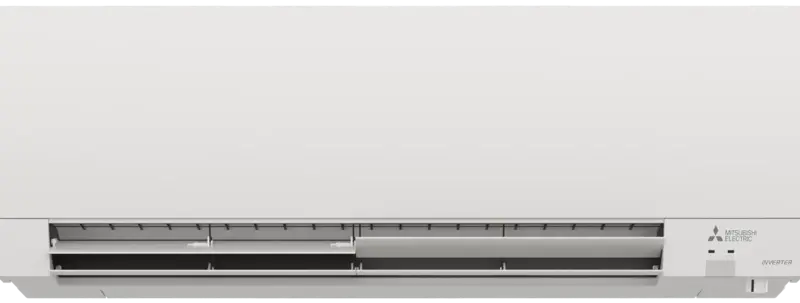
The Mitsubishi MSZ-FS06NA wall-mounted ductless heat pump at 32.2 SEER2 leads all verified residential mini-split efficiency ratings. The single-zone unit pairs with Mitsubishi’s outdoor MUZ-FS06NA condenser for a complete single-zone installation. Mitsubishi Electric Trane HVAC US (METUS, formed May 2018) manufactures the lineup with R-454B transition launched April 17, 2025.
Verified MSZ-FS06NA Specs
- 32.2 SEER2 (residential mini-split leader)
- 6,000 BTU/hr cooling capacity
- Variable-speed inverter compressor
- Wireless remote + Mitsubishi kumo cloud Wi-Fi adapter (optional)
- 7-year compressor / 5-year parts warranty (registered)
- R-454B refrigerant (post-April 2025 METUS transition)
Why MSZ-FS06NA Wins Efficiency
The 32.2 SEER2 rating sets the residential mini-split SEER2 ceiling. The variable-speed inverter compressor delivers continuous output matching across the full operating range — the technical foundation for the SEER2 leadership. The single-zone configuration excels in additions, garages, sunrooms, and master bedroom suites where central duct extension proves impractical.
MSZ-FS06NA Caveats
The 6,000 BTU/hr capacity covers approximately 150–250 sq ft only. Whole-home coverage requires multi-zone configurations (lower per-head SEER2). Single-zone installed cost typically runs $4,000–$6,500 versus $2,000–$3,500 for equivalent window AC capacity. METUS R-454B transition reaches buyers in mid-to-late 2025 inventory; verify refrigerant type at purchase.
Best Cold-Climate Single-Zone: Mitsubishi Hyper-Heat MSZ-FS
Video: Why is my electric Bill so High!!! Mitsubishi Mini Split Hyper Heat Review Part 4. Feb 2020 Bill · J-Mart
The Mitsubishi Hyper-Heat MSZ-FS series delivers cold-climate heating performance rated to -13°F US residential operation. The Hyper-Heat technology adds compressor enhancements (vapor injection, enhanced inverter logic) that maintain heating capacity at low ambient temperatures. The series dominates cold-climate ductless mini-split selection in IECC zones 6–8.
Critical Cold-Climate Disclosure
Active class-action investigation: Migliaccio & Rathod LLP opened an investigation in August 2025 into Mitsubishi Hyper-Heat alleged compressor and control-board failures plus underperformance below 20°F versus the “-13°F” marketing claim. Investigation status as of May 2026: ongoing. No class certification yet. Buyers should treat the “-13°F” claim as a marketing rating per Mitsubishi spec sheet rather than guaranteed field performance and consider extended warranty coverage.
Why Hyper-Heat Still Wins Despite Disclosure
- Hyper-Heat remains the most-recommended cold-climate ductless mini-split by HVAC contractors per HVAC-Talk and /r/HVAC forum sentiment
- Real-world performance generally meets cold-climate operation needs even if -13°F marketing claim disputed
- DOE Cold Climate Heat Pump Challenge participation validates engineering credibility
- METUS service network provides better cold-climate ductless coverage than competitors
Hyper-Heat Trade-Offs
- Installation cost premium 15–25% above standard Mitsubishi mini-splits
- Compressor/control-board failure risk per class-action investigation
- “-13°F” marketing claim disputed in active litigation
- Compressor enhancement adds noise (43–48 dB indoor vs 38–42 dB standard)
Best Carrier Mini-Split: 38MPRB Infinity
Video: Carrier Good, Better, BEST Review · Atlas AC
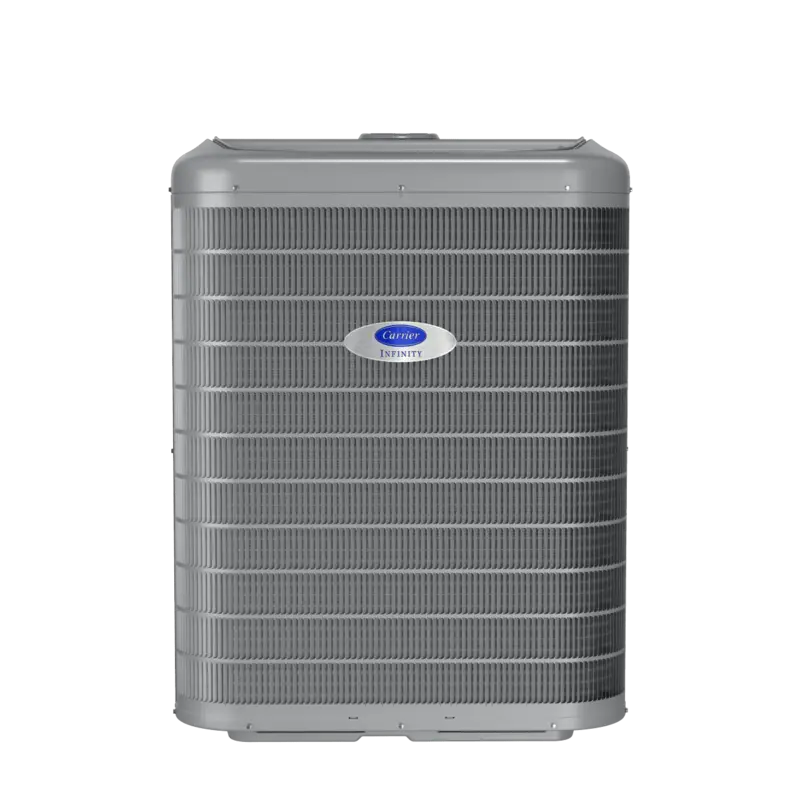
The Carrier 38MPRB Infinity single-zone mini-split at 28.5 SEER2 outperforms Carrier’s own central AC flagship (Infinity 26VNA1 at 21 SEER2) by 36%. The mini-split alternative offers Carrier homeowners a path to higher efficiency than the central lineup achieves.
Why 38MPRB Competes
- 28.5 SEER2 (residential mini-split tier-1 efficiency)
- 18 HSPF2 heating efficiency
- Variable-speed inverter compressor
- Carrier Infinity System Control thermostat compatibility (when integrated with home automation)
- Carrier Factory Authorized Dealer installation
- R-454B refrigerant transition complete
When to Choose 38MPRB Over MSZ-FS06NA
Buyers already committed to Carrier brand (existing FAD relationship, Infinity ecosystem integration) achieve 90% of Mitsubishi MSZ-FS efficiency with Carrier brand support. The Carrier 90-day registration window plus Consumer Choice labor warranty option (5y parts + 3y labor) beats Mitsubishi’s 60-day registration and parts-only warranty.
Best Value Brand: Daikin FIT + Goodman Ductless
Video: DIY Air Conditioner Replacement Part 1 -Step By Step Guide- · The DIY HVAC Guy
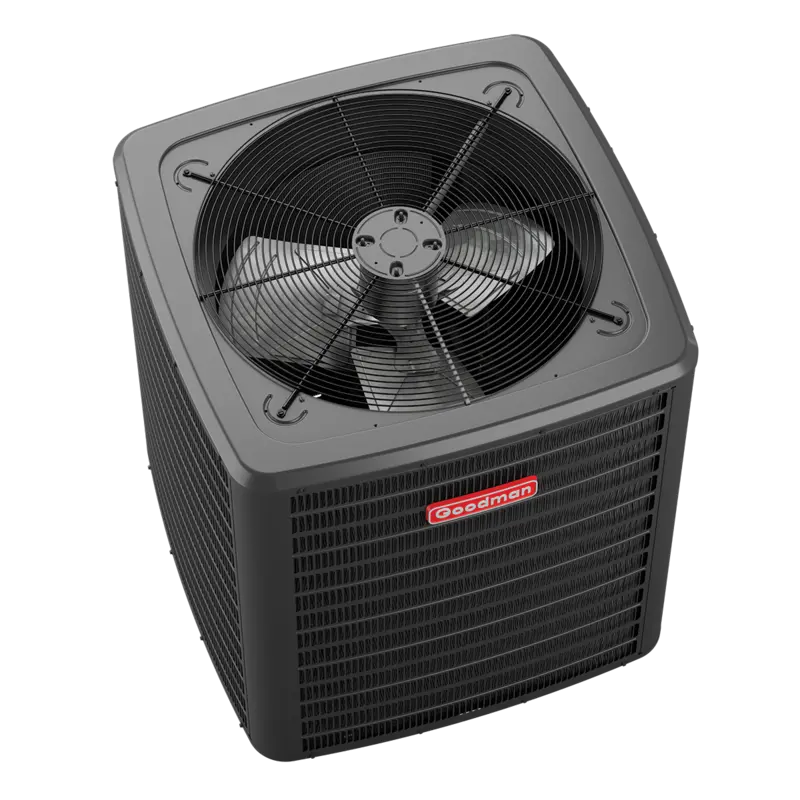
Daikin FIT side-discharge mini-split and Goodman ductless lines deliver R-32 refrigerant value-tier mini-splits at 20–30% below Mitsubishi pricing. Both lines manufacture under Daikin Comfort Technologies North America (DCT NA) — same parent organization producing Daikin/Goodman/Amana central HVAC.
Daikin FIT Advantages
- R-32 refrigerant (technician-preferred, simpler service, cheaper cylinder refill long-term)
- 12-year parts plus 12-year unit replacement warranty (industry-leading)
- Side-discharge design fits tight installation locations
- Daikin Industries (Japan) — world’s largest HVAC manufacturer engineering pedigree
Goodman Ductless Advantages
- DCT NA manufacturing at Waller, Texas
- Lower installed pricing than Daikin FIT (~5–10%)
- Same R-32 refrigerant ecosystem
- Goodman dealer network broader than Daikin in many US markets
Value-Tier Mini-Split Trade-Offs
- 18+ SEER2 efficiency (vs 32.2 SEER2 Mitsubishi MSZ-FS06NA)
- Lower noise floor than Mitsubishi premium lines
- DCT NA brand recognition lower than Mitsubishi in mini-split category
- Multi-zone configurations less mature than Mitsubishi engineering
Best Multi-Zone: Mitsubishi M-Series
Video: Why is my electric Bill so High!!! Mitsubishi Mini Split Hyper Heat Review Part 4. Feb 2020 Bill · J-Mart
Mitsubishi M-Series multi-zone mini-split systems pair one outdoor condenser with 2–8 indoor heads. The platform delivers mature multi-zone engineering with 22+ SEER2 efficiency depending on configuration. Whole-home mini-split coverage typically requires multi-zone configuration.
M-Series Capacity Configurations
- 2-zone: typically 18K BTU outdoor / 6K + 12K indoor heads
- 3-zone: typically 24K BTU outdoor / 6K + 9K + 9K indoor heads
- 4–8 zone: scaling up to 60K BTU outdoor capacity
- Mix-and-match wall-mount, ceiling-cassette, floor-mount, ducted-air-handler indoor heads
Why M-Series Leads Multi-Zone
Mitsubishi pioneered residential multi-zone ductless mini-split engineering in the US market. The outdoor condenser dynamic load matching delivers continuous output matching across multiple simultaneously-operating indoor heads. The M-Series control wiring and refrigerant line-set engineering accommodates installation runs up to 165 ft per indoor head.
Multi-Zone Caveats
- Per-head SEER2 lower than single-zone leader (22+ vs 32.2)
- Installation complexity higher than single-zone (multiple line-sets, condensate drains, control wiring)
- Installed cost $3,500–$5,500 per indoor head for 3-zone system
- Outdoor condenser sized for sum of indoor head capacities
SEER2 Mini-Split Comparison
| Brand / Model | SEER2 Rating | Refrigerant | Notes |
|---|---|---|---|
| Mitsubishi MSZ-FS06NA | 32.2 SEER2 | R-454B | Residential mini-split SEER2 leader |
| Mitsubishi Hyper-Heat MSZ-FS | 30+ SEER2 | R-454B | Cold-climate (-13°F US, class-action active) |
| Carrier 38MPRB Infinity | 28.5 SEER2 | R-454B | Outperforms Carrier central AC |
| Daikin VRV LIFE | 22+ SEER2 | R-32 | Variable refrigerant flow |
| Mitsubishi M-Series multi-zone | 22+ SEER2 | R-454B | Mature multi-zone engineering |
| LG LMU multi-zone | 22+ SEER2 | R-454B | Alternative to Mitsubishi |
| Daikin FIT single-zone | 18+ SEER2 | R-32 | DCT NA value tier |
| Goodman ductless single-zone | 18+ SEER2 | R-32 | DCT NA Waller TX |
Cold-Climate Mini-Split Selection
Cold-climate mini-split selection requires verified low-ambient heating capacity ratings — not just SEER2 (cooling-focused metric).
Cold-Climate Brand Hierarchy
- Mitsubishi Hyper-Heat MSZ-FS — rated -13°F US (class-action investigation disclosure)
- Daikin Aurora / FIT cold-climate variants — rated -5°F to -13°F operation
- LG cold-climate multi-zone — rated -5°F to -13°F operation
- Fujitsu Halcyon XLTH — rated -15°F operation
- Standard mini-split lines — rated to 0°F to 14°F typical
Cold-Climate HSPF2 Comparison
Heating efficiency matters more than SEER2 in IECC zones 5–8. HSPF2 (Heating Seasonal Performance Factor, 2023 test methodology) measures full-season heating efficiency. Cold-climate mini-splits should achieve HSPF2 ≥10 for credible cold-weather performance.
Federal & State Rebate Status
The federal Section 25C Energy Efficient Home Improvement Credit terminated December 31, 2025 under the One Big Beautiful Bill Act (Public Law 119-21). 2026 mini-split installations are not eligible for federal 25C tax credit (which historically provided up to $2,000 for qualifying heat pump mini-splits).
State HEAR Rebates (May 2026)
The federal Home Electrification and Appliance Rebates (HEAR / HEEHRA) program funds rebates up to $8,000 for qualifying heat pump installations (including mini-split heat pumps) — but only in states where the program has launched. State availability and AMI tier qualification both required.
HEAR live (15 states accepting applications May 2026): NM, WI, NY, RI, MA, NC, GA, MI, MD, IN, IL, CO, WA, ME, AZ.
HEAR not yet launched in: TX, FL, OH, VA, MN.
HEAR waitlisted/exhausted: CA (closed February 2026), VT, DC.
AMI Tier Qualification (Federal Statute)
- ≤80% AMI households: 100% rebate up to $8,000 for heat pump (mini-split or central)
- 80–150% AMI households: 50% rebate up to $4,000
-
150% AMI households: not eligible for HEAR
AMI lookup tool: huduser.gov/portal/datasets/il.html.
Mini-Split Pricing by Configuration
National-average mini-split installation pricing varies by zone count, capacity, and complexity.
| Configuration | Equipment Range | Installed Range |
|---|---|---|
| Single-zone 9K–12K BTU | $1,200–$2,500 | $3,500–$5,500 |
| Single-zone 18K BTU | $1,500–$3,000 | $4,000–$6,500 |
| 2-zone 18K–24K BTU | $2,800–$5,000 | $6,500–$10,500 |
| 3-zone 24K–36K BTU | $4,200–$7,500 | $9,500–$15,500 |
| Whole-home multi-zone (4–8 zones) | $7,500–$15,000 | $18,000–$35,000 |
Installed pricing varies materially by region, contractor labor rates, electrical infrastructure availability (220V circuits, panel capacity), and refrigerant line-set length.
How to Choose a Mini-Split System
Three primary inputs drive mini-split brand and model selection.
Climate Priority
Cold climates (IECC zones 5–8): Mitsubishi Hyper-Heat MSZ-FS or Daikin Aurora/FIT cold-climate variants. Verify HSPF2 ≥10 for credible cold-weather heating.
Cooling-dominant climates (IECC zones 1–4): Mitsubishi MSZ-FS06NA (single-zone) or M-Series (multi-zone). Maximize SEER2 efficiency rating for cooling-heavy operation.
Coverage Priority
Single room or addition: Single-zone Mitsubishi MSZ-FS06NA (efficiency leader) or Carrier 38MPRB (Carrier brand support).
Multi-room or whole-home: Mitsubishi M-Series multi-zone or LG LMU multi-zone (3–8 indoor heads).
Replacing central AC: Whole-home multi-zone mini-split or hybrid approach (central AC + supplemental mini-split for problem zones).
Budget Priority
Premium budget: Mitsubishi MSZ-FS06NA or Hyper-Heat MSZ-FS. Carrier 38MPRB Infinity.
Mid budget: Daikin FIT side-discharge or Daikin VRV LIFE. Mitsubishi M-Series base tier.
Value budget: Goodman ductless or Daikin FIT entry tier. R-32 refrigerant ecosystem advantage.