Carrier vs Bryant 2026: Same Factory, Different Price
Bryant and Carrier ship identical hardware from the same Indianapolis plant. Bryant Evolution 191VAN = Carrier Infinity 26VNA1 at 21 SEER2 — 10-15%.
Quick Verdict on Carrier vs Bryant
Carrier and Bryant ship identical hardware from the same Indianapolis manufacturing plant under Carrier Global Corporation ownership. Bryant Evolution 191VAN = Carrier Infinity 26VNA1 at 21.0 SEER2. Bryant typically retails 10–15% cheaper installed because of different dealer distribution. Both brands operate the same 90-day warranty registration window — the longest in residential HVAC. Choose Bryant if you want Carrier engineering at lower price; Carrier if you want Factory Authorized Dealer install quality screening.
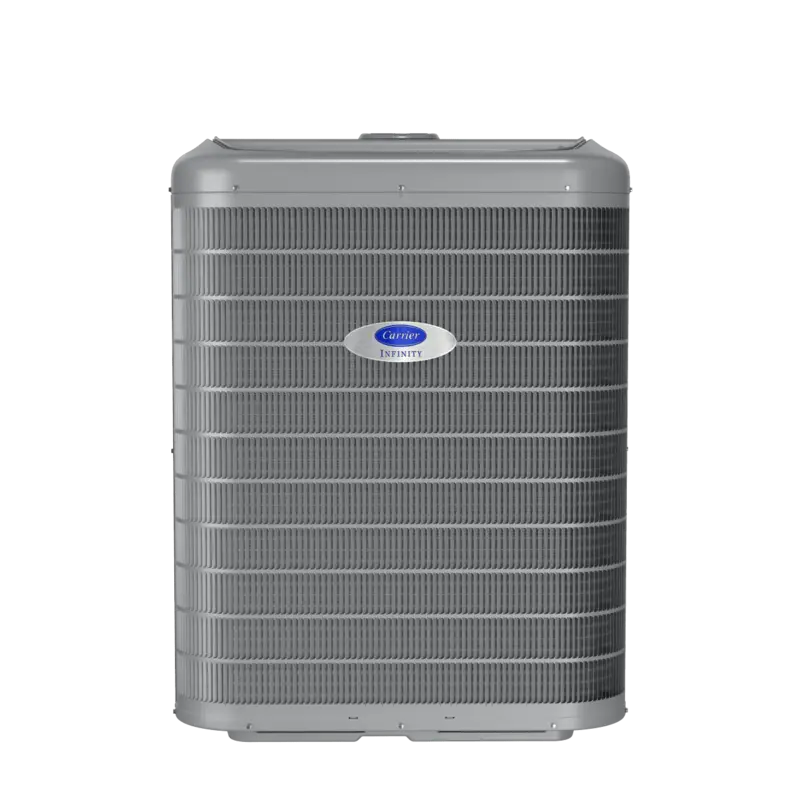
Carrier Good, Better, BEST Review · Atlas AC
CARRIER/BRYANT HVAC Brand COMPARISON! · HVAC Guide for Homeowners
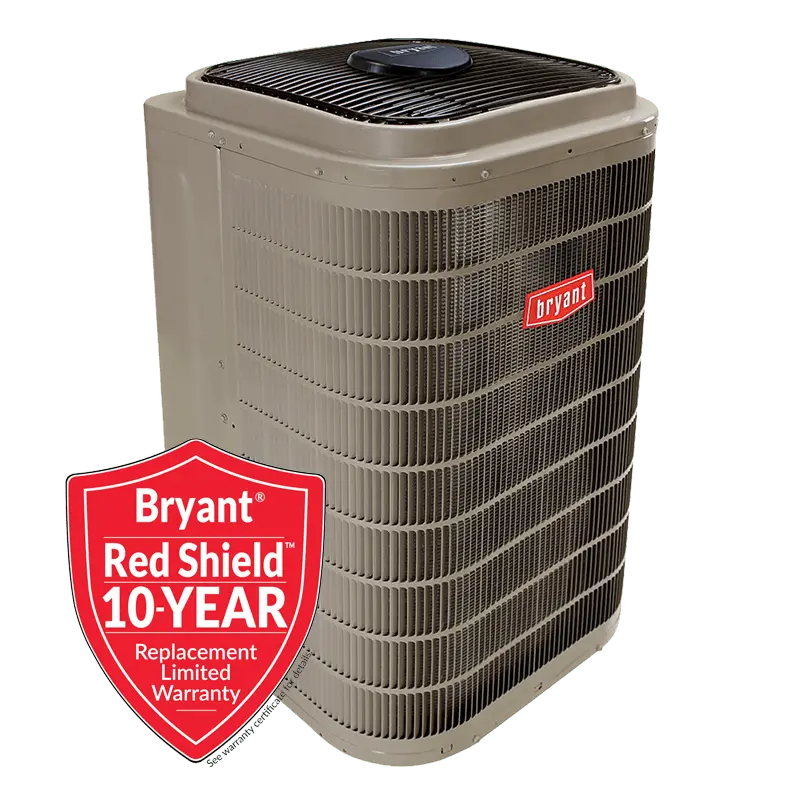
Bryant and Carrier ship 1:1 SKU pairs across the central AC, heat pump, and furnace lineups. The hardware is functionally identical because both brands manufacture on parallel assembly equipment at the Indianapolis plant.
Central AC Mapping
| Bryant Tier | Carrier Tier | Bryant Model | Carrier Model | Both SEER2 |
|---|---|---|---|---|
| Evolution™ | Infinity® | 191VAN |
26VNA1 |
21.0 |
| Preferred™ | Performance™ | 148TAN |
26TPA8 |
18.0 |
| Legacy™ | Comfort™ | 135SAN |
26SCA5 |
16.5 |
| Crossover/specialty | (identical SKUs) | 37MUHA, 37MURA, 33NM3 |
37MUHA, 37MURA, 33NM3 |
same model # |
Identical Crossover Models
The crossover/specialty equipment — Performance 19 Crossover (37MUHA), Compact Crossover (37MURA), domestic hot water air-to-water heat pump (33NM3) — ships under identical model numbers on both Carrier and Bryant brand sites. The shared model numbers make the manufacturing reality explicit: these are literally the same products sold under different brand badges.
Pricing Differential
PICKHVAC 2025 pricing data confirms the 10–15% pricing differential between Bryant and Carrier for equivalent tonnage installations.
| Tonnage | Bryant Installed | Carrier Installed | Bryant Savings |
|---|---|---|---|
| 2 ton | $3,000–$5,500 | $3,900–$5,900 | ~10–15% |
| 3 ton | $3,500–$6,500 | $4,500–$7,300 | ~10–15% |
| 4 ton | $4,500–$7,500 | $5,400–$8,400 | ~10–15% |
| 5 ton | $5,000–$8,500 | $5,900–$9,600 | ~10–15% |
What Drives the Pricing Differential
Three factors explain why Bryant installs cheaper than Carrier for identical hardware. Carrier Factory Authorized Dealers face stricter training and customer satisfaction requirements that add operational overhead. Carrier brand positioning targets premium-tier resale value perception supporting higher dealer pricing. Bryant distribution uses a broader general dealer network competing on price rather than service certification.
Warranty Comparison
Both brands operate the same 90-day registration window — the longest standard in residential HVAC. The notable difference: Bryant does not advertise the Consumer Choice 5-year parts plus 3-year labor option that Carrier offers.
| Warranty Component | Carrier | Bryant |
|---|---|---|
| Registration window | 90 days | 90 days (same) |
| Default (unregistered) | 5 years parts | 5 years parts |
| Registered parts | 10 years (Consumer Choice option 1) | 10 years |
| Registered parts + labor option | 5y parts + 3y labor (Consumer Choice option 2) | Not advertised |
| Heat exchanger (premium furnace) | Lifetime (59MN7 registered) | Lifetime (Evolution 987M registered) |
Bryant Lacks Consumer Choice Labor Option
Carrier’s Consumer Choice program allows buyers to select between 10-year parts only OR 5-year parts plus 3-year labor at registration. Bryant’s official warranty page does not advertise the parts-plus-labor option. The Consumer Choice labor warranty appears to be Carrier-channel specific. Buyers wanting labor warranty on Bryant equipment should verify with the dealer in writing before signing — separate dealer-administered labor warranties may be available at additional cost.
Dealer Network Comparison
The dealer network difference is the most consequential 2026 distinction between Carrier and Bryant.
Carrier Factory Authorized Dealer (FAD)
Carrier FAD designation requires stricter training, technical certification, and customer satisfaction screening than general dealers. The FAD designation appears on the Carrier dealer locator. FAD installations provide quality-controlled service that drives 40–50% of equipment longevity per industry data. FAD premium pricing reflects the quality assurance.
Bryant General Dealer Network
Bryant distributes through a broader general dealer network without an equivalent screening tier. Installation quality varies more by individual dealer than within Carrier FAD network. Buyers should verify dealer credentials independently before selecting a Bryant dealer.
Verification Steps for Bryant Dealers
Three credentials matter when selecting a Bryant dealer. State HVAC contractor licensing required in approximately 35 states plus DC. EPA Section 608 certification federally required for refrigerant handling. Better Business Bureau ratings and Google review depth (50+ reviews spanning multiple years) for independent verification.
Reliability Data (Shared)
Both Carrier and Bryant share the same Consumer Reports 4/5 predicted reliability rating because they share hardware. Owner satisfaction ratings track at 5/5 for both brands. Lifespan estimates run 15–20 years for both with proper annual maintenance.
2020 CPSC Recall Affected Both Brands
A 2020 CPSC ductless heat pump fire-hazard recall affected Carrier and Bryant simultaneously — approximately 5,350 US plus 450 Canadian units. The dual-brand recall reflects the shared manufacturing reality. Six fire incidents triggered the recall. Affected models included 1.5-ton multi-zone, 4-ton multi-zone, and 4-ton single-zone ductless equipment sold March 2015 through April 2019 at $600–$4,000 retail.
Mini-Split Anomaly
One open question separates Bryant from Carrier in published spec data. The Bryant Evolution mini-split 37MPRA lineup page claims 35.1 SEER2 / 30 HSPF2 — meaningfully higher than Carrier’s equivalent 38MPRB at 28.5 SEER2.
Possible Explanations
Either Bryant has introduced a newer mini-split SKU than Carrier has published, or one brand’s lineup page is stale. The 35.1 SEER2 figure remains flagged for verification and should not be cited as confirmed until product data sheets confirm the rating. Buyers comparing mini-splits between the two brands should pull the AHRI Reference Number for matched outdoor-plus-indoor configurations rather than relying on lineup-page claims.
When to Choose Bryant Over Carrier
Three scenarios favor Bryant clearly.
1. Pricing Priority
If installed cost matters most and a qualified Bryant dealer is available in your ZIP code, the 10–15% pricing savings on identical hardware delivers immediate value. A 3-ton install saves $700–$1,500 with Bryant versus Carrier. The math compounds when you factor that the equipment is literally the same.
2. Strong Local Bryant Dealer Presence
Some markets have stronger Bryant dealer concentration than Carrier FAD presence. If your local Bryant dealer carries equivalent NATE certifications, state HVAC license, EPA Section 608 certification, and BBB rating to local Carrier FAD options, the dealer quality differential disappears — making the pricing advantage the dominant factor.
3. Mid-Tier and Entry-Tier Equipment
Mid-tier (Preferred/Performance) and entry-tier (Legacy/Comfort) installations benefit most from the pricing differential because the equipment doesn’t carry premium-tier features that justify Carrier brand premium. Both brands deliver the same engineering at these tiers.
When to Choose Carrier Over Bryant
Three scenarios favor Carrier.
1. Factory Authorized Dealer Install-Quality Assurance
Carrier FAD network provides screened install quality that Bryant general dealer network doesn’t match systematically. For premium-tier (Infinity/Evolution) installations where install quality drives 40–50% of equipment longevity, FAD screening typically pays back the brand premium through fewer repair calls and longer equipment life.
2. Consumer Choice Labor Warranty Option
Buyers wanting the 5-year parts plus 3-year labor warranty option should select Carrier. Bryant does not advertise the Consumer Choice labor option. Separate dealer-administered labor warranties may be available on Bryant installations but at additional cost.
3. Brand Prestige for Resale Value Perception
Some buyers prioritize Carrier brand name for home resale value perception. The brand premium effect on home values is difficult to quantify but matters to some sellers. Bryant brand recognition is lower among general consumer buyers.
Sister-Brand Buying Logic
The Carrier-Bryant dual-brand strategy creates a simple buying logic: get a Bryant quote alongside any Carrier quote you receive. Compare the dealer credentials side by side. If Bryant dealer carries equivalent state HVAC license, EPA Section 608 certification, BBB rating, and Google review depth as the Carrier FAD alternative, the pricing differential favors Bryant. If Carrier FAD dealer demonstrates clearly superior install-quality credentials, the brand premium may pay back through longer equipment life.
Six dimensions where Bryant and Carrier are functionally tied:
- Identical hardware (1:1 SKU pairs across all three tiers)
- Same 90-day warranty registration window (longest in residential HVAC)
- Shared 4/5 Consumer Reports predicted reliability
- Same Indianapolis manufacturing plant
- Same R-454B refrigerant transition completion
- Same crossover/specialty equipment with identical model numbers (37MUHA, 37MURA, 33NM3)
Corporate Relationship
Carrier Global Corporation (NYSE: CARR) owns both Carrier and Bryant. Bryant was acquired in 1955 via the Affiliated Gas Equipment merger. Both brands share US manufacturing, including a major plant in Indianapolis, and ship identical residential lineups as 1:1 SKU pairs under Carrier Global corporate engineering. The dual-brand structure serves distribution channel coverage: Carrier through a screened Factory Authorized Dealer network, Bryant through a broader general dealer network reaching value-conscious buyers.